Projects / 002 · Immersive experience center

Porsche Studio Portland

The room is the screen.
LocationPortland, Oregon
Timeframe2025 – present
RolePixera Programmer · Technical Director · Creative Technologist
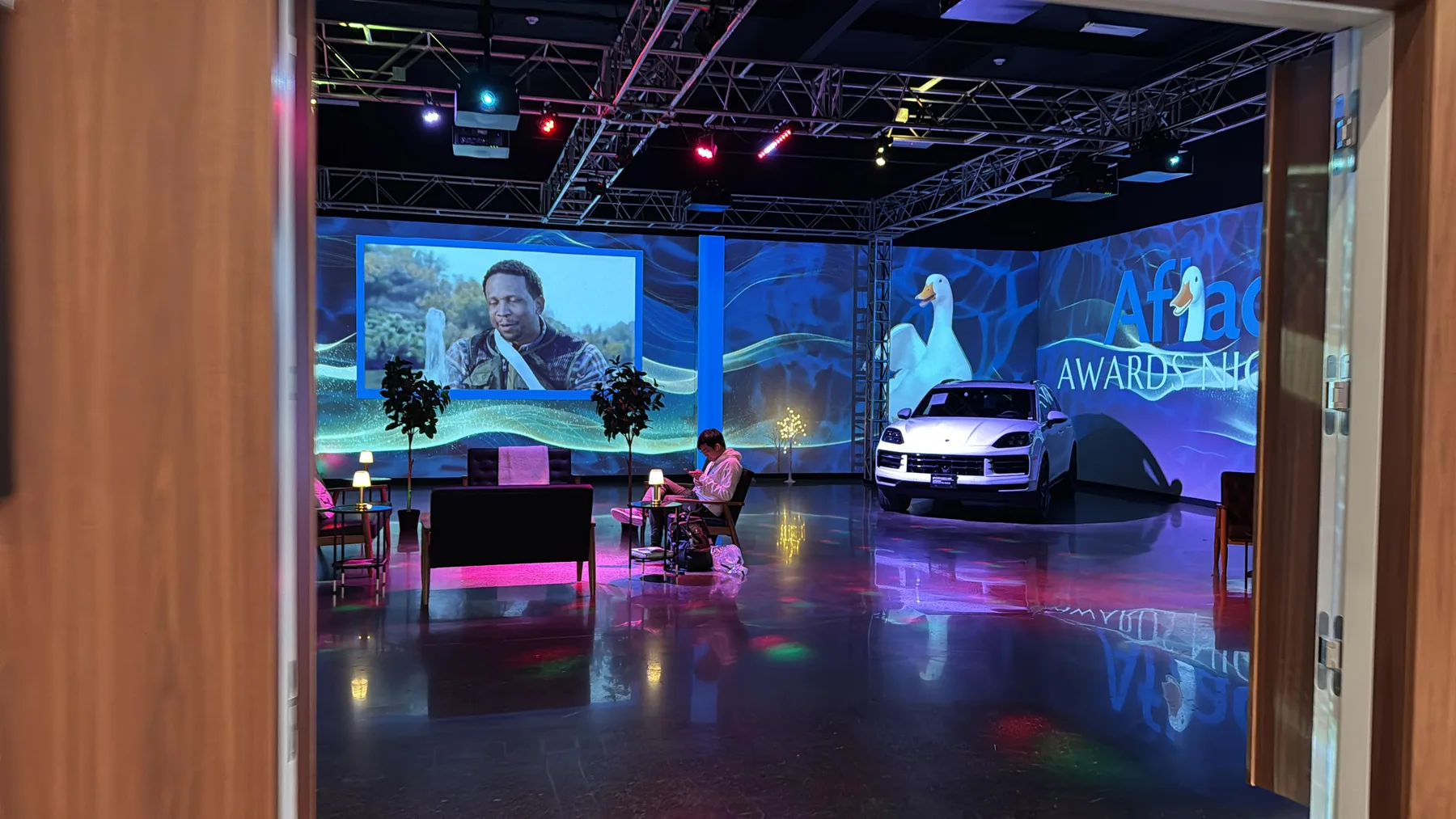
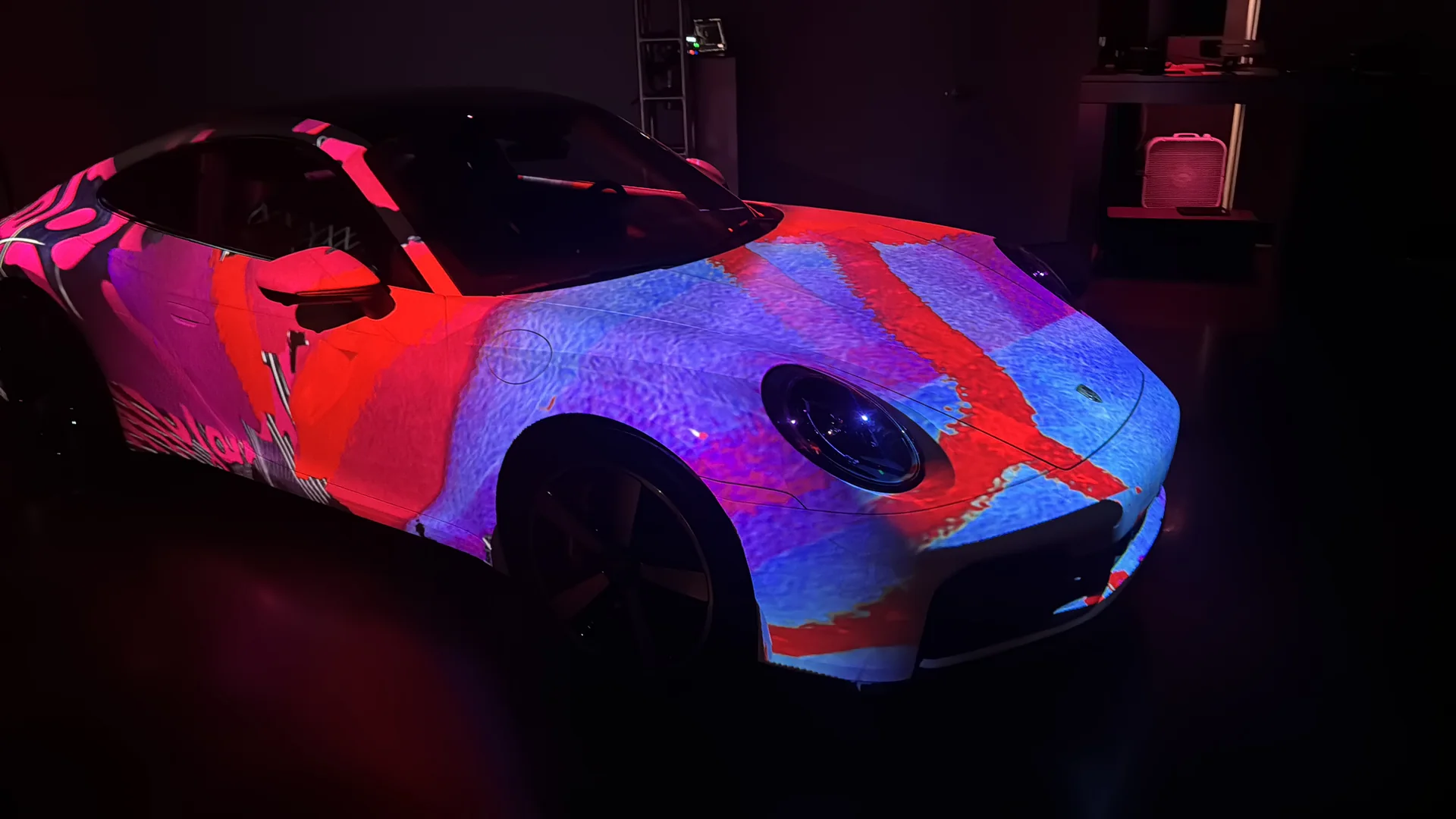
Porsche vehicle presented inside the Immersive Experience Center during a multi-surface awards program
Fig 01 · IXC awards environment
00

Overview

A multi-surface automotive environment built to move between immersive brand storytelling, live programming, private events, and daily studio operation without exposing the complexity underneath.

Challenge

A visually seamless room still has to behave like a dependable system. Multiple display surfaces, processors, workstations, event formats, and operators needed to function as one environment while remaining flexible enough to change roles quickly.

Response

I programmed and maintained the Pixera playback environment, coordinated routing and Datapath processing, managed mapping and content deployment, and translated the technical layer into clear operating workflows for the people running the space.

Outcome

The result is an immersive studio that can shift from cinematic automotive content to partner events and live experiences while preserving image continuity, operational clarity, and the visual standards of a luxury brand.

11projectors
04projection surfaces
18,119 pxcombined canvas
60 fpsNotchLC pipeline
01 · Space

One continuous visual field

Content crosses corners, doors, vehicles, and changing sightlines. The environment reads as a room first and a display system second.
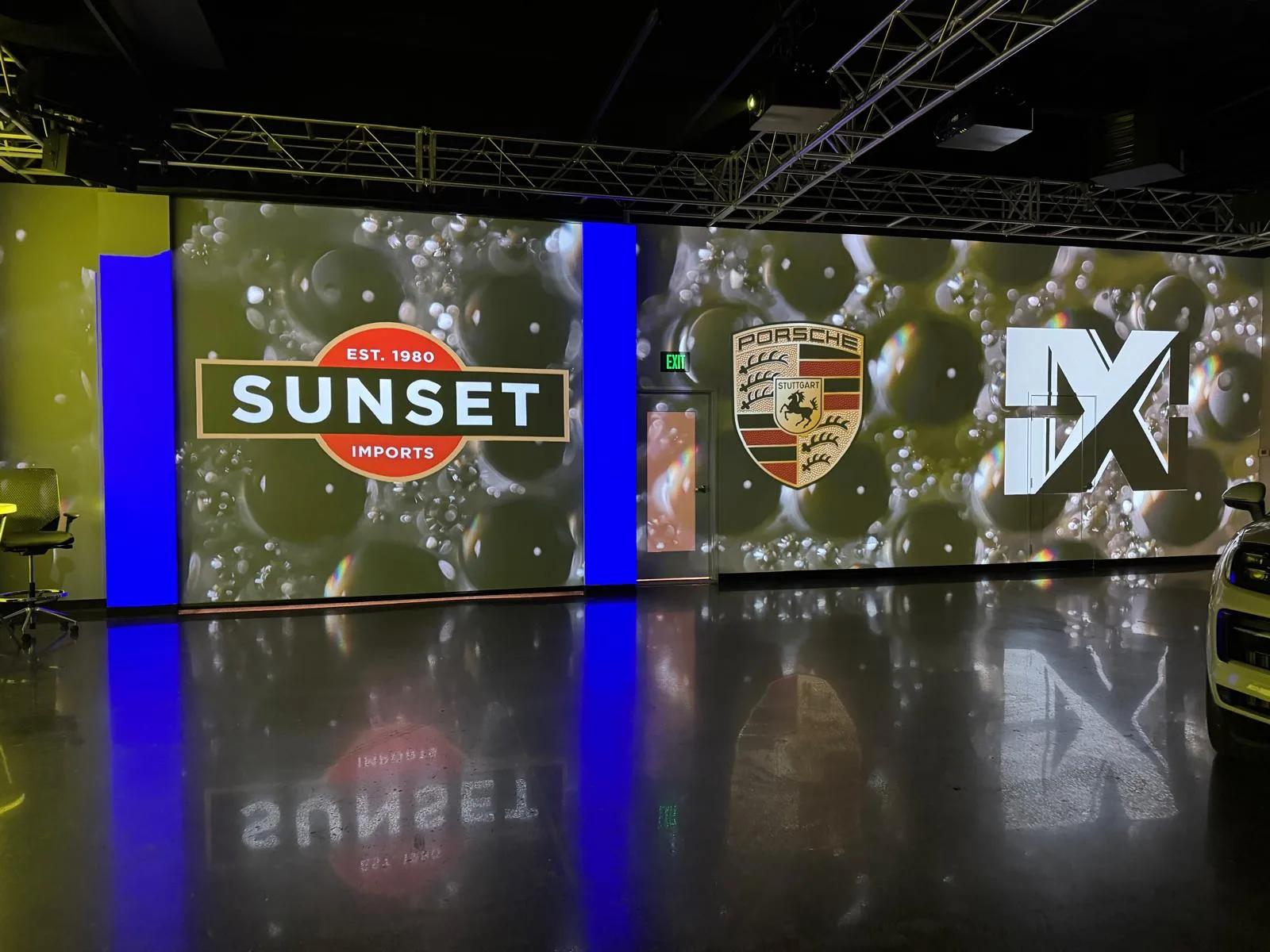
Partner event content adapted across the studio's large-format screens
Partner event adaptation
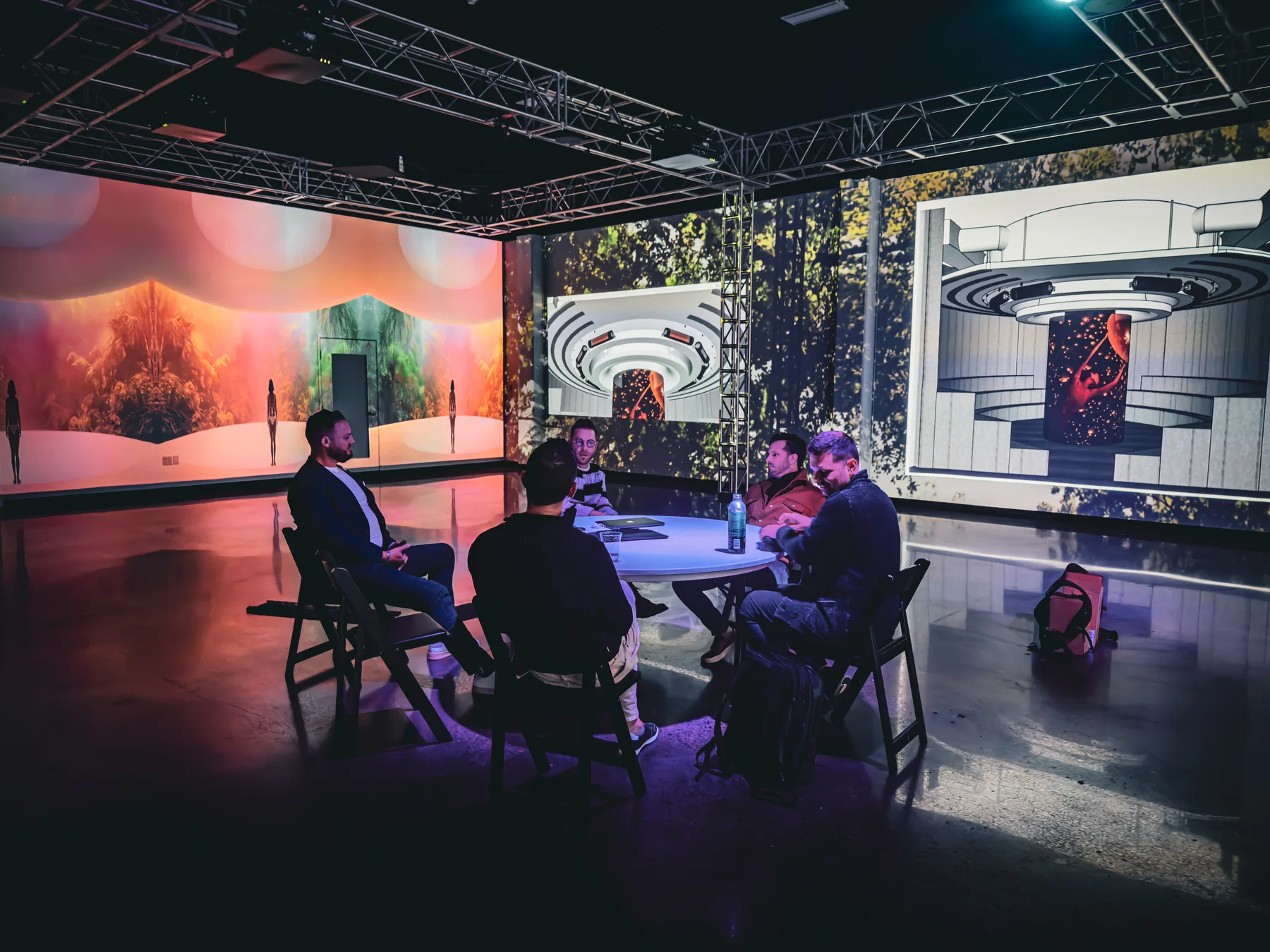
Projection-mapped automotive presentation room at Porsche Studio Portland
Immersive presentation environment
02 · Spec

The room as a spec sheet

Partner studios deliver content straight into this rig, so the rig is documented like a product. I authored the IXC content delivery guide — canvas maps, codec requirements, naming — and partner content arrives show-ready instead of needing rescue on site.

North wall3908 × 1080 · 3 proj
East wall5151 × 1080 · 3 proj
South wall3905 × 1080 · 2 proj
West wall5155 × 1080 · 3 proj
Combined canvas18,119 × 1080 · ~16.78:1
DeliveryNotchLC .mov · 60 fps · Rec.709
  1. Respect the seams

    Projector blends fall on the vertical grid lines — no fine text or logos on a seam.

  2. Black is still light

    #000000 projects as dark grey, so content is designed for projected black — no hard white edges at the frame.

  3. The room must close

    360° content wraps North → East → South → West — and the West edge has to meet North seamlessly.
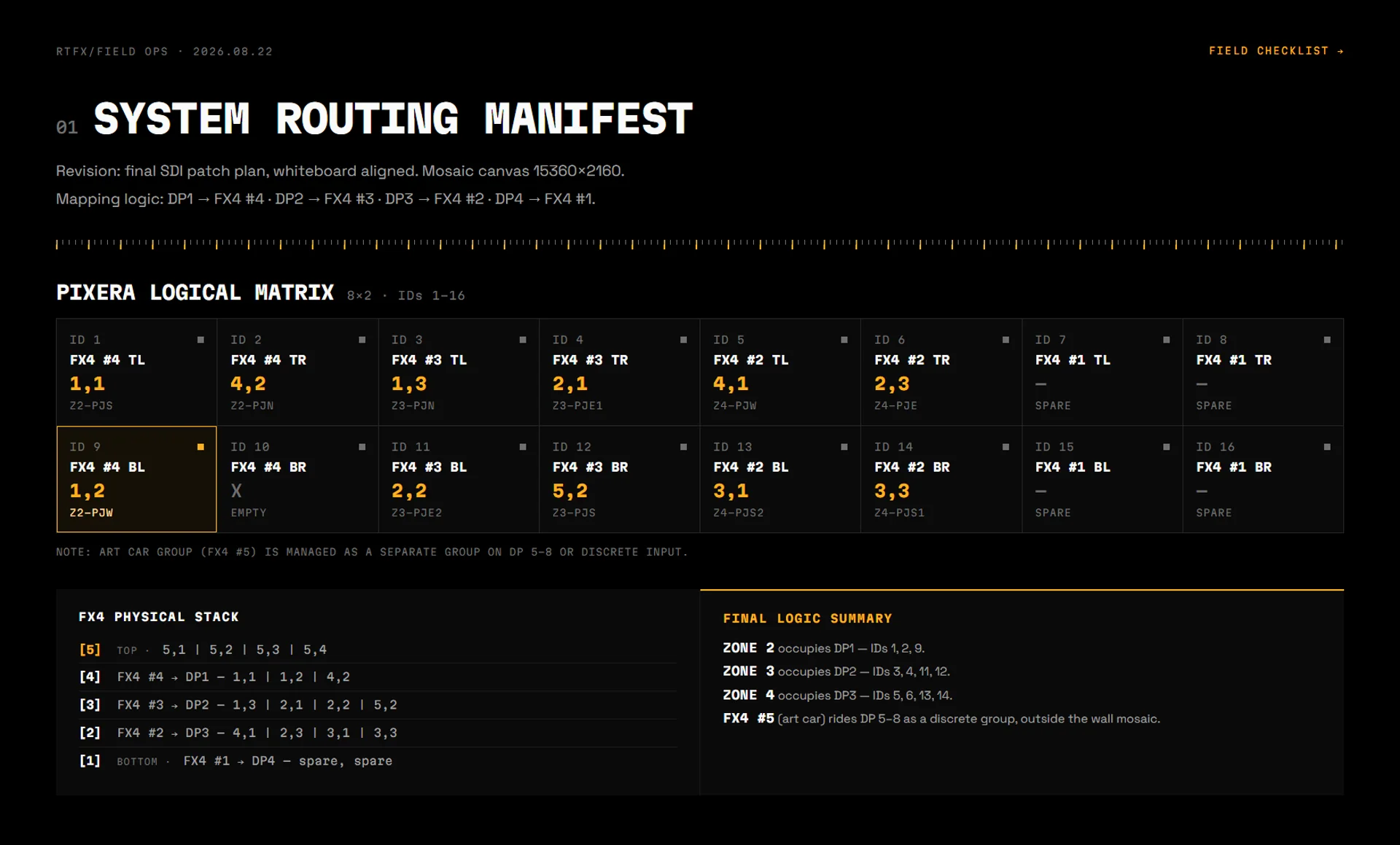
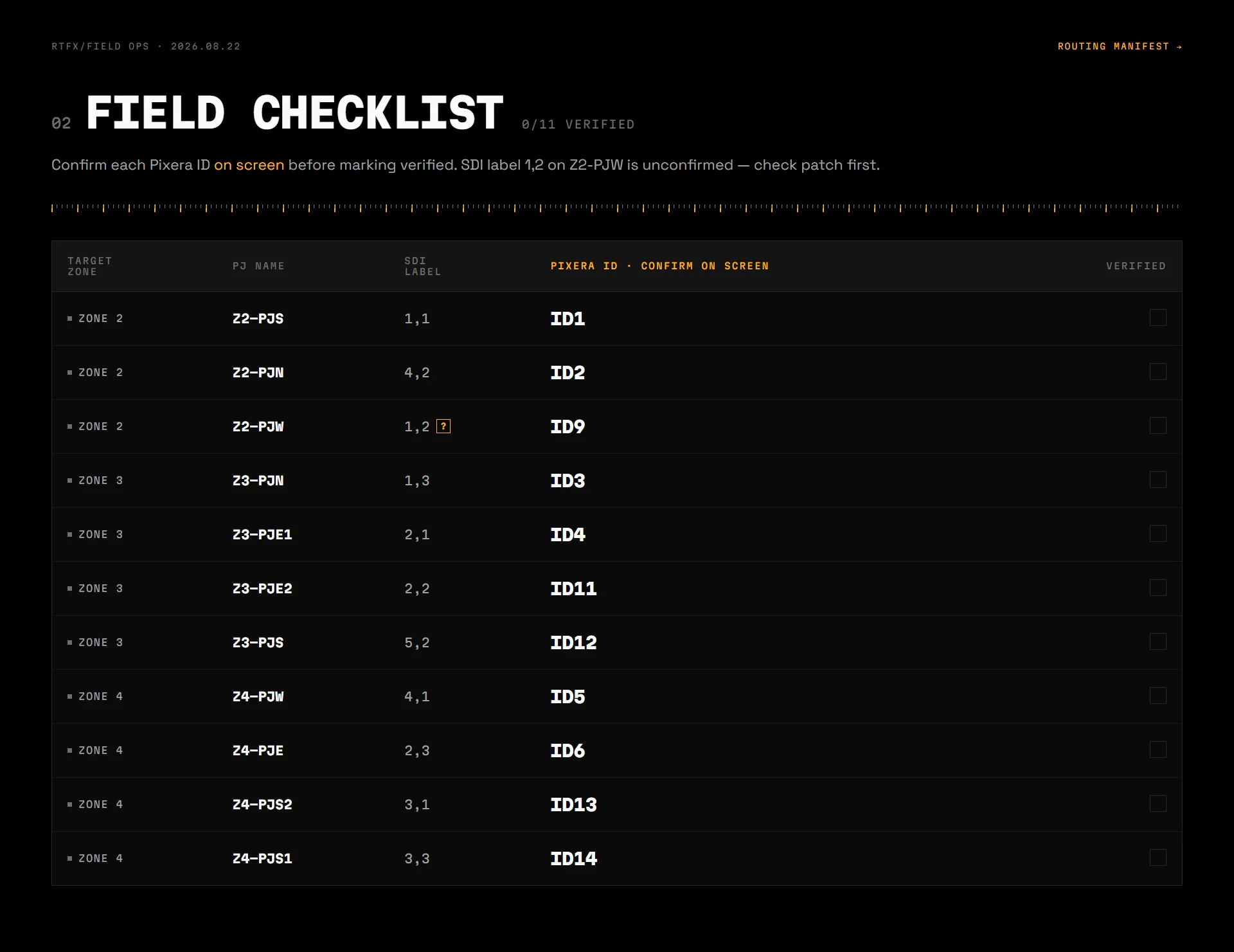
System routing manifest: a Pixera logical matrix mapping sixteen output IDs across four FX4 processors to labelled SDI cables and wall projectors across three zones, with the FX4 physical stack order and final patch logic reconciled against the whiteboard.
The routing manifest — every output ID, SDI label, and projector reconciled against the whiteboard before a single cable moved.
Field checklist table pairing each of eleven wall projectors with its zone, SDI label, and on-screen Pixera ID, flagging one unconfirmed SDI label, with a verification checkbox per row.
The field checklist — eleven projectors, each to be confirmed on screen against its ID before it's marked verified. Paper beats memory in a dark room.
03 · Documentation

The studio, documented

The curated record of the multi-surface environment. Click any frame to view it full size.
The room as geometry — content composited against the mapped box, not a flat rectangle.
A client look built in the mapped space before anyone sets foot in the room.
A Porsche 911 in a dark room with red and blue content projected across its body
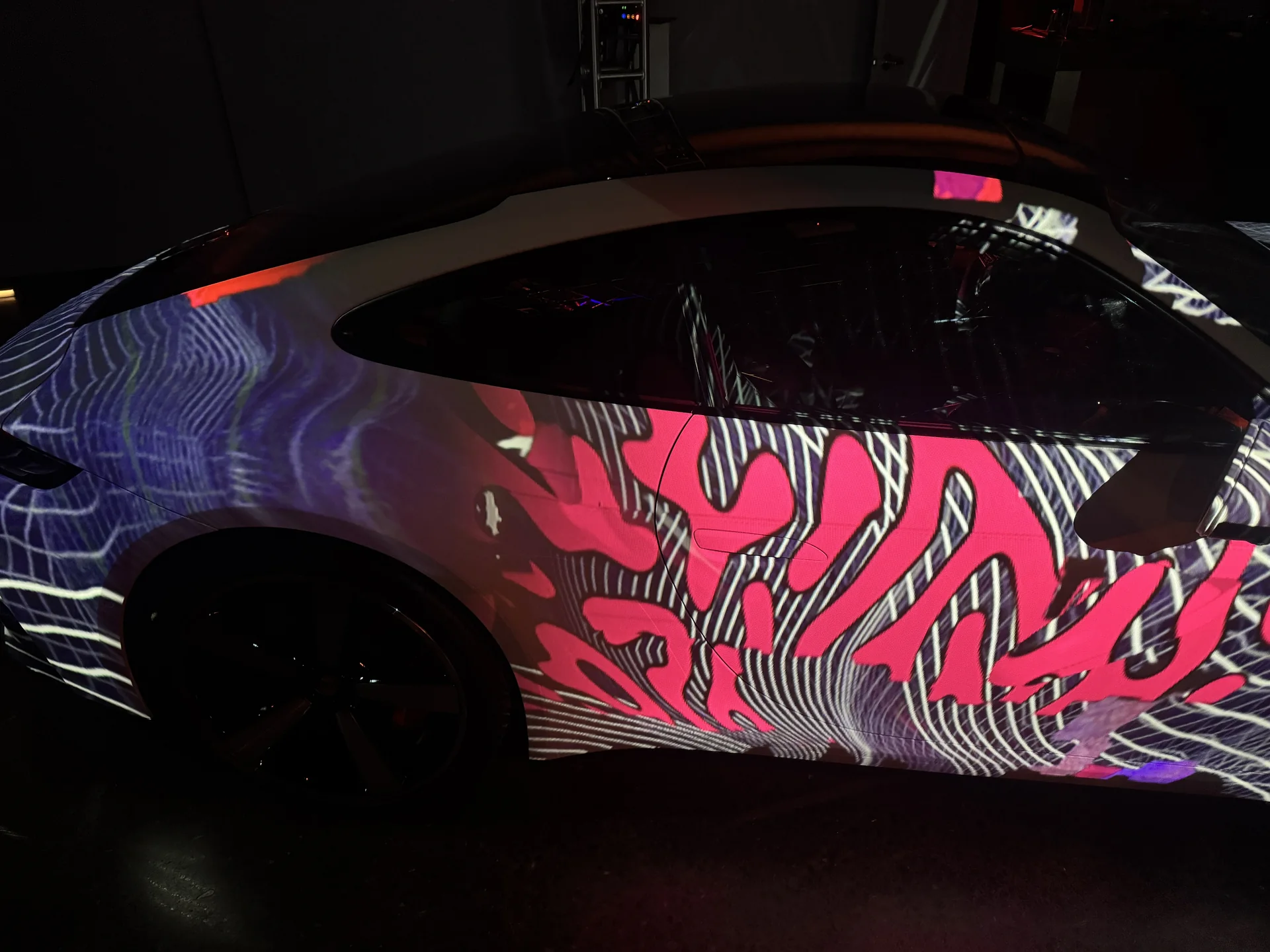
Projection on the car itself — the vehicle becomes the surface.
Install day — the room's glass arriving before any of it is a picture.
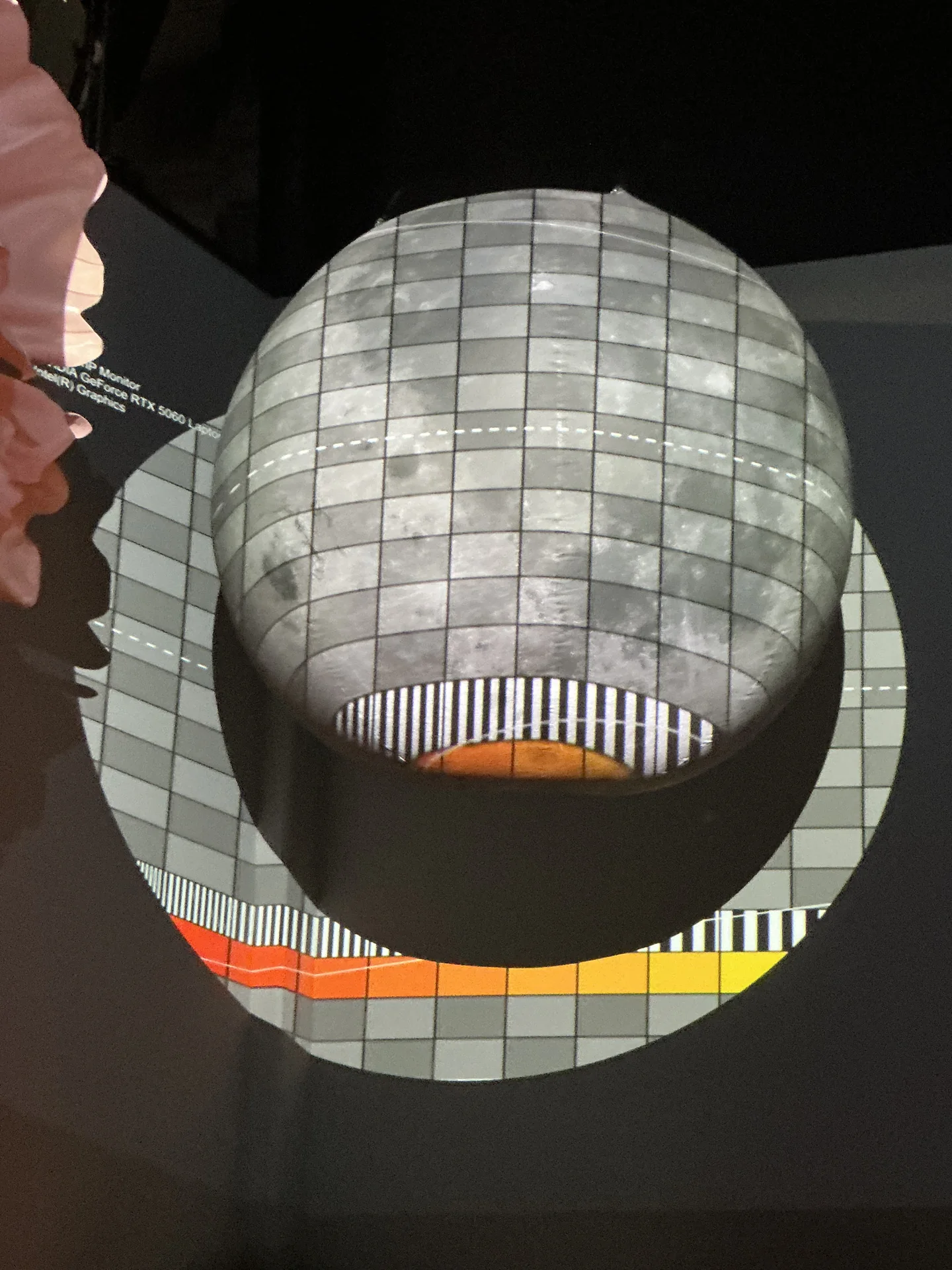
A spherical object under projection showing a checkerboard calibration grid
Calibrating a curved surface — grid first, content second.
A single wall at full brightness during a look pass.
The operating position sits in the room it drives.
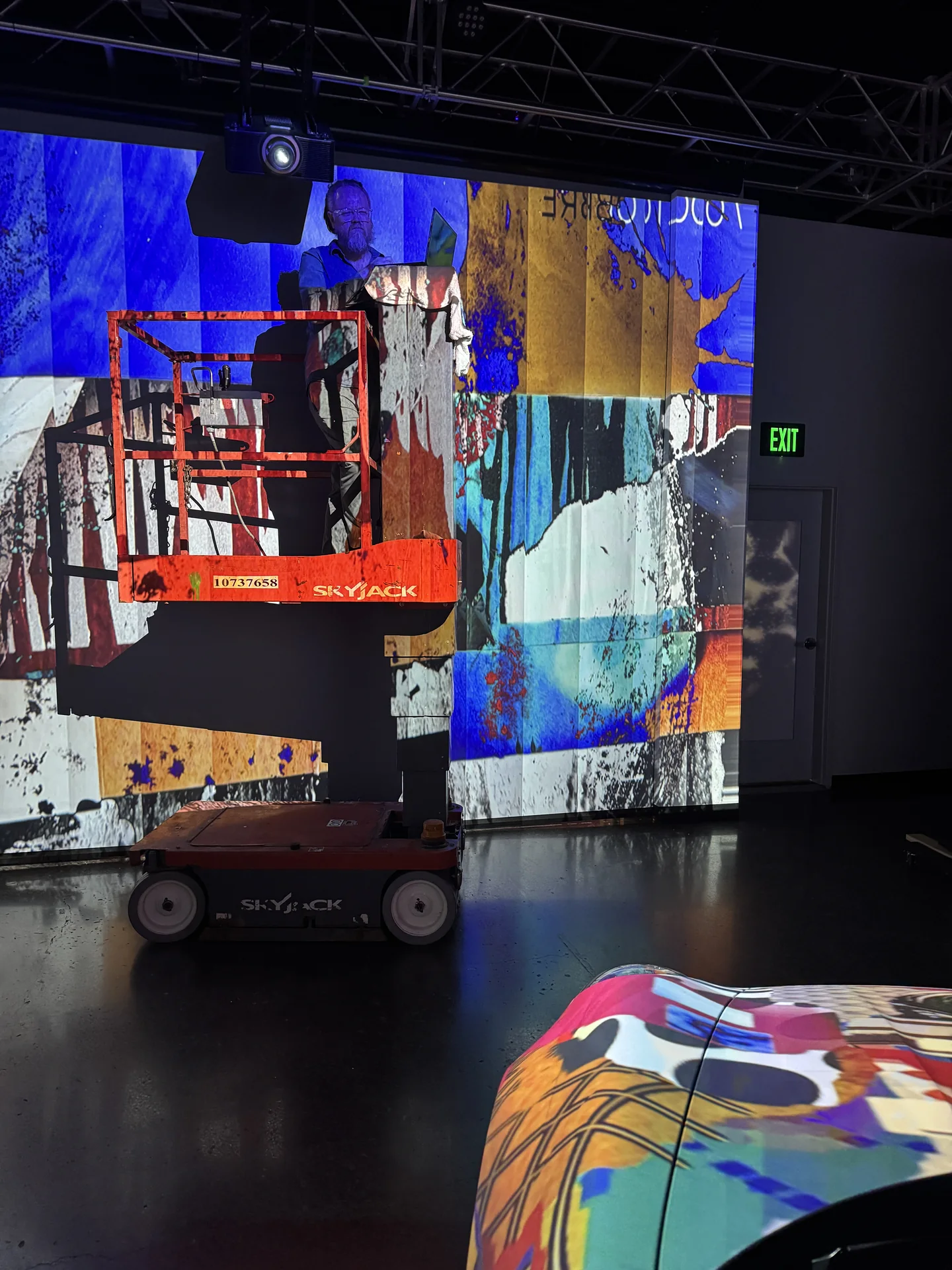
Content check mid-build — lift still in the room.
Wrap test — one composition running continuously across every surface.
The seam is the hard part — content has to cross it without a break.
Room at rest, content live — daily studio operation looks like this.
Car in the space, content over both — the studio's core trick.
A quieter livery — line work reading cleanly across bodywork.
Same car, different skin — a livery swap is a clip change.
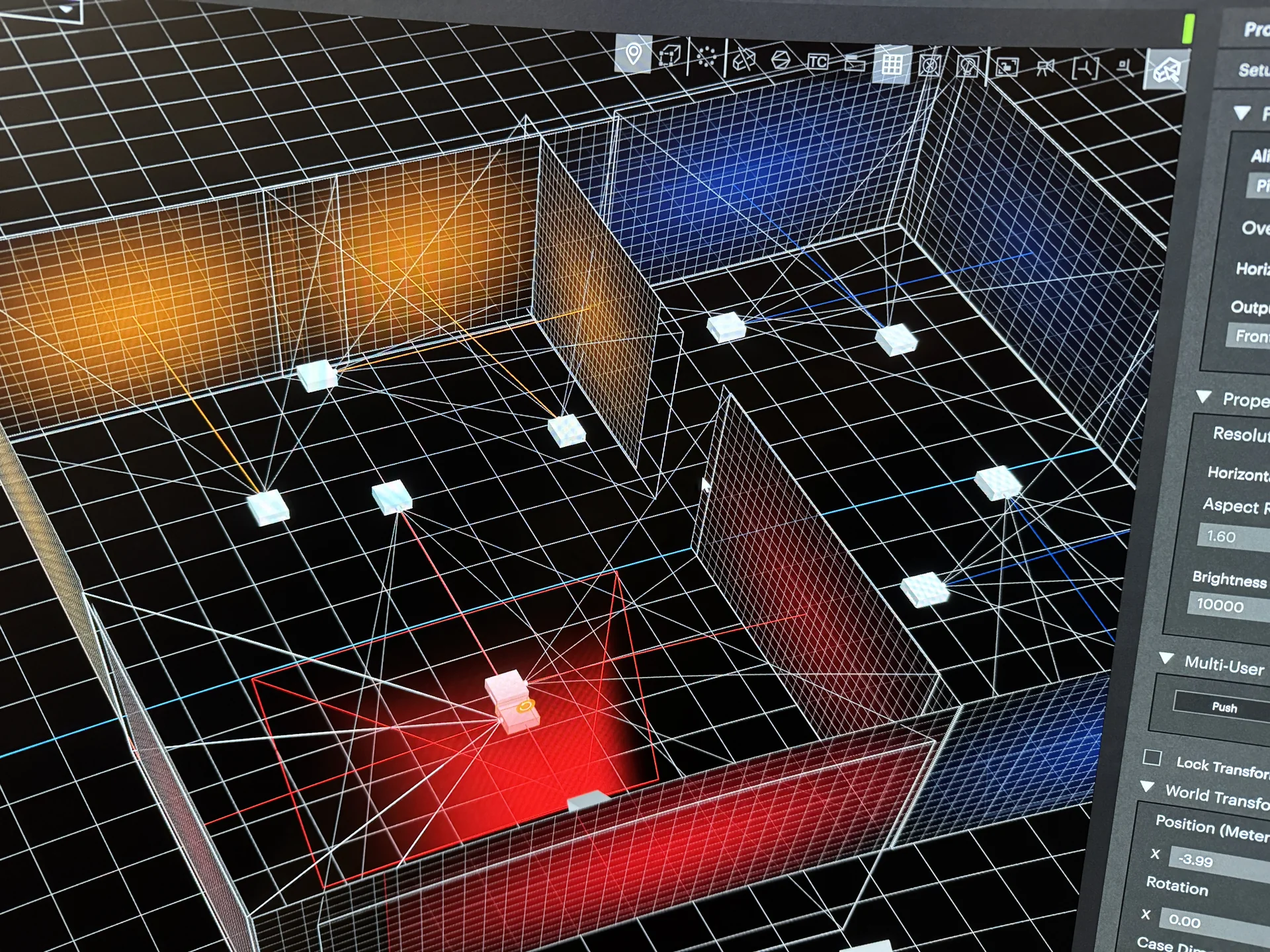
A 3D layout view showing projector positions and coverage cones inside the room model
Projector layout in the model — coverage worked out before anything is hung.
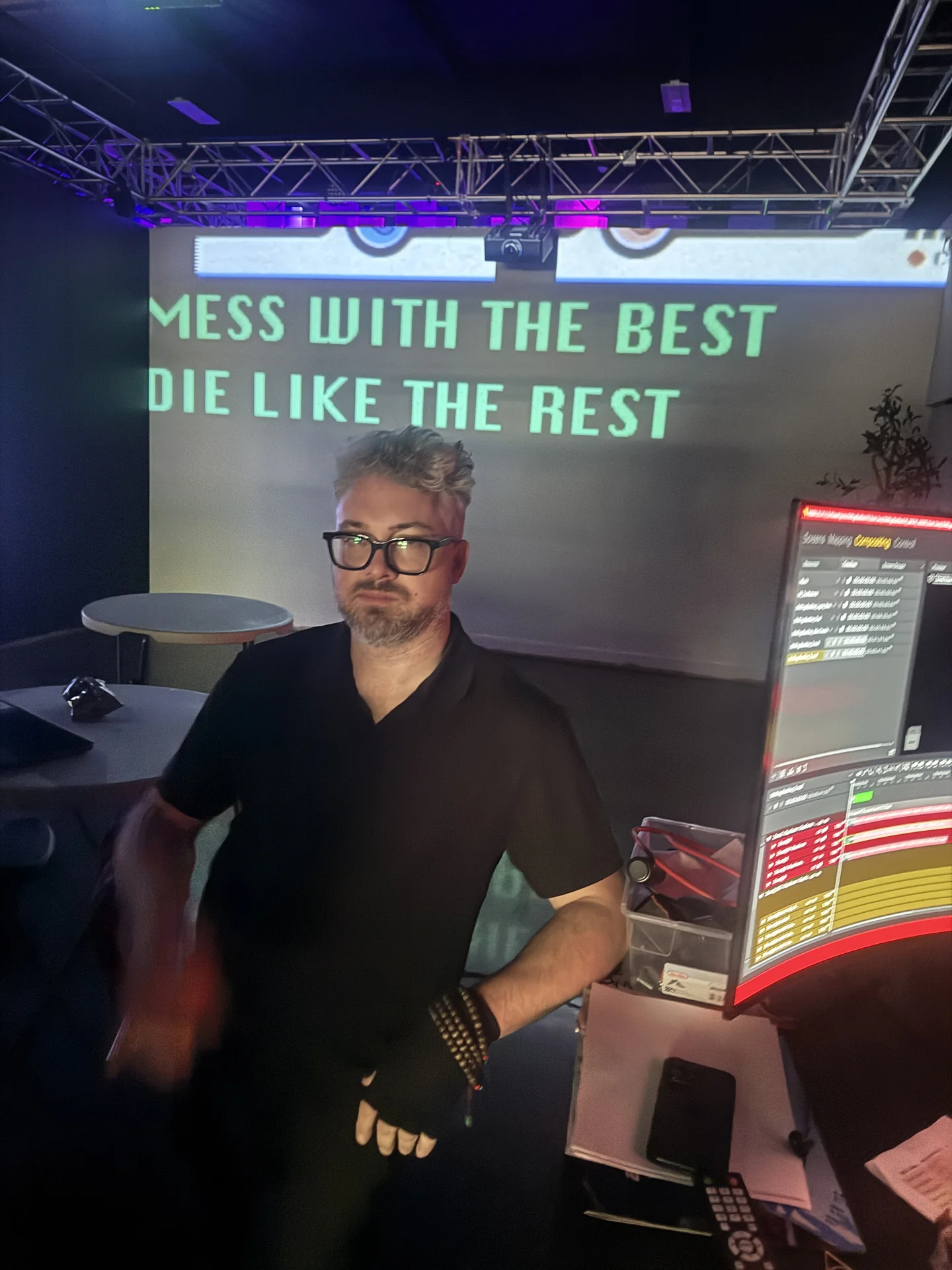
A technician standing in the room in front of projected text, beside the mapping monitor
Working from inside the picture.
A scissor lift in the room in front of a wall running dense colour content
Access equipment stays until the last alignment pass.
Halftone look at room scale — the floor picks up half of it.
One wall, edge to edge.
Scale check — the car gives the wall its size.
A Porsche in the studio with pink and white pattern projected along its flank
Pattern held on a moving surface — the body's curves do the distortion.
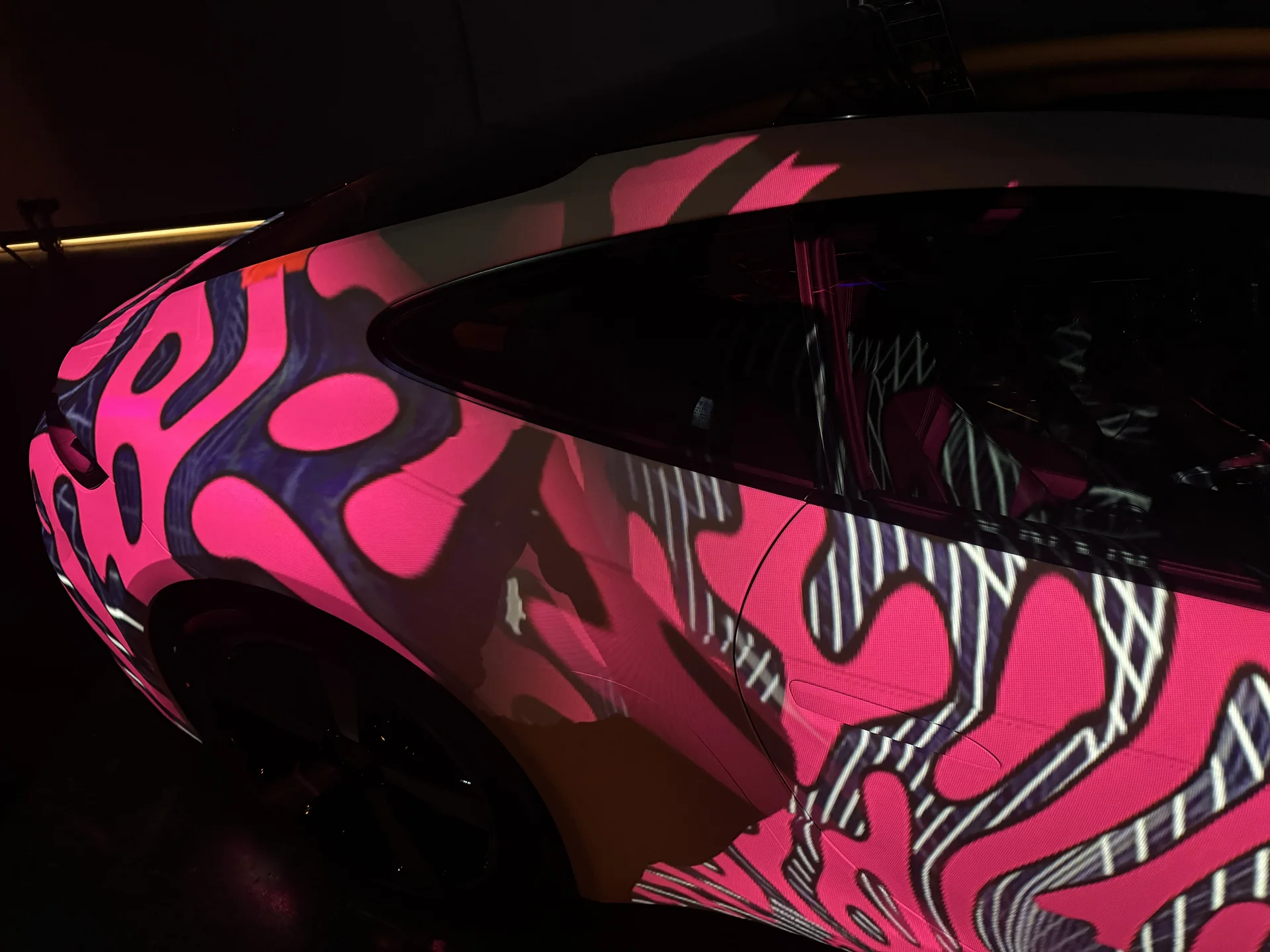
Close view of a Porsche with bold pink graphic content projected across the rear quarter
Close in, the mapping has to survive the reflection.
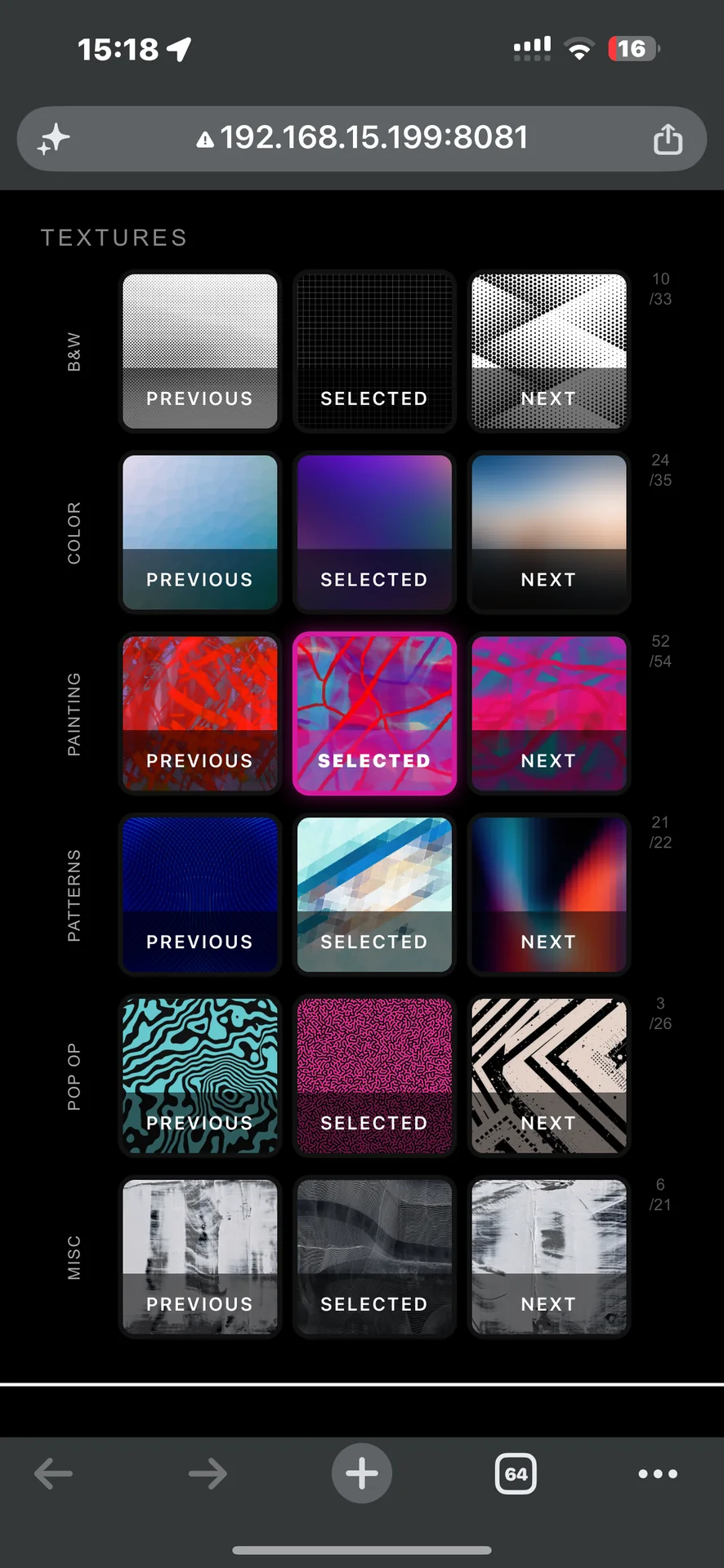
A phone browser showing a custom texture picker with categories for black and white, colour, painting, patterns and pop op
The picker staff actually use — categories, not file paths.
Tiling a look so it repeats without showing the join.
Loops are authored to the room's aspect, not cropped to it.
Cue grid — one press puts a whole look in the room.
Install walkthrough — floor content up while the room is still a site.
Handover distance — from the door it reads as one room.